
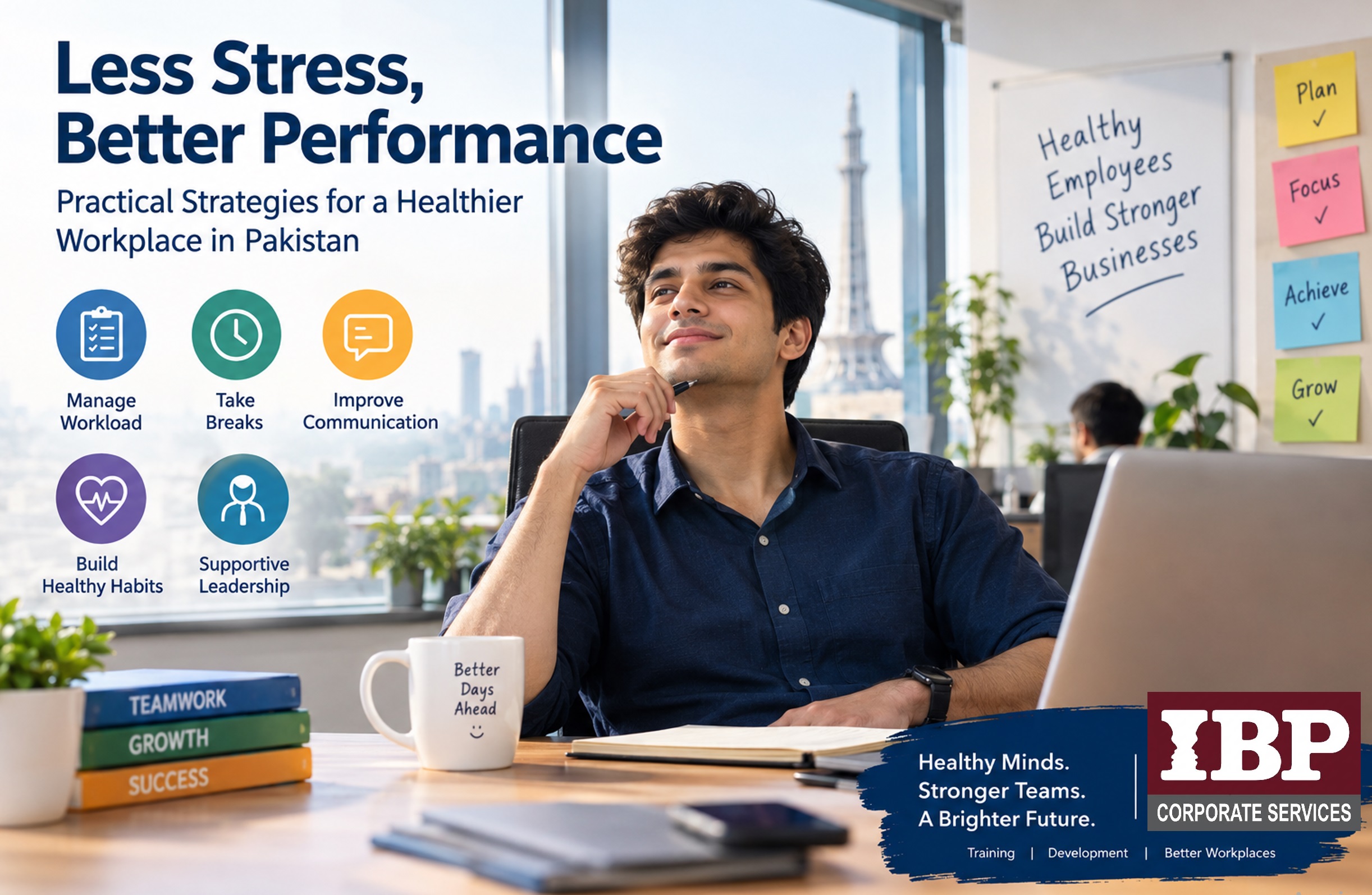
Stress management in Pakistan has become an important concern for employees and business owners. Tight deadlines, heavy workloads, difficult conversations, and long working hours can make it challenging to maintain a healthy balance between professional responsibilities and personal life. When workplace stress continues for weeks or months, it can affect an employee's health, performance, and relationships with colleagues.
Effective stress management is not about telling employees to calm down or work harder. It requires practical solutions, supportive management, and a workplace where people can discuss problems before they become serious.
What Causes Stress in the Workplace?
Workplace stress can develop for many reasons, and the cause is not always obvious. An employee may appear to be doing well while struggling with pressure behind the scenes.
Some common causes of workplace stress include:
- Heavy workloads: Too many responsibilities and unrealistic deadlines can leave employees feeling overwhelmed.
- Unclear expectations: Frequent changes to instructions or poorly defined responsibilities can create confusion.
- Poor communication: Misunderstandings between managers and employees can create unnecessary tension.
- Workplace conflicts: Disagreements with colleagues, supervisors, or clients can make the working environment uncomfortable.
- Lack of recognition: Employees may lose motivation when their efforts and achievements go unnoticed.
- Poor work-life balance: Long working hours and work-related worries at home can leave little time for rest and family.
Identifying the source of stress is the first step towards managing it effectively.
How Workplace Stress Affects Employee Performance
Stress does not always cause an immediate decline in performance. Employees may continue meeting their targets while becoming increasingly tired and frustrated.
Over time, prolonged stress can affect concentration, decision-making, communication, and motivation. Employees may make avoidable mistakes, become impatient with colleagues, or struggle to complete routine tasks.
For businesses, these problems can contribute to absenteeism, staff turnover, poor teamwork, and reduced productivity. Managers may assume that an employee has become careless or uncooperative when excessive pressure is part of the problem.
Organisations that take workplace stress seriously are better positioned to identify concerns early and find suitable solutions.
Practical Ways to Manage Employee Stress
Managing stress does not always require major changes. Small, consistent habits can make daily responsibilities easier to handle.
1. Schedule Work According to Priorities
Start the day by identifying the most important tasks. Break larger projects into smaller steps and set realistic deadlines. When everything is treated as urgent, it becomes difficult to focus on what matters most.
Employees should also speak with their managers when their workload exceeds the time available. Discussing priorities early is more productive than struggling silently until deadlines are missed.
2. Take Short Breaks Throughout the Day
Working continuously for long periods can increase fatigue and reduce concentration. Taking short breaks, going for a brief walk, stretching, or stepping away from a screen can help employees return to their work with better focus.
Breaks should be part of a sensible working routine rather than something employees feel guilty about taking.
3. Improve Workplace Communication
Workplace problems often become more stressful when people avoid discussing them. If instructions are unclear, employees should ask questions. If a disagreement arises, it is better to focus on the issue rather than make personal remarks.
Managers can help by listening carefully, communicating expectations clearly, and allowing employees to raise concerns without fear of humiliation.
Organisations can also explore employee development and training programs to help staff improve communication, teamwork, and professional skills.
4. Maintain Healthy Daily Habits
Adequate sleep, regular physical activity, balanced meals, and time away from work can help people cope with everyday pressure. Employees should try to maintain boundaries between working hours and personal time wherever their jobs allow.
These habits cannot eliminate every source of workplace stress, but they can make difficult situations easier to manage.
The Role of Managers in Stress Management
Stress management should not be treated as an individual employee's responsibility alone. Managers influence workloads, communication, deadlines, and the overall working environment.
A supportive manager makes sure that targets are realistic, distributes responsibilities fairly, and addresses workplace disagreements before they become serious. Regular discussions with employees can also help identify concerns that might otherwise go unnoticed.
Recognition matters as well. A simple acknowledgement of good work can help employees feel valued, particularly during demanding periods.
Businesses should also review their working practices. If several employees are experiencing similar problems, the cause may be staffing levels, unclear procedures, unrealistic expectations, or management practices rather than individual weaknesses.
How Professional Stress Management Training Can Help
Some workplace challenges require more than informal conversations. Professional stress management training can help employees and managers understand common sources of pressure and develop practical ways to respond.
Training may cover time management, emotional awareness, communication skills, conflict resolution, and techniques for handling difficult situations. It can also help managers recognise signs of excessive pressure and respond constructively.
IBP Corporate Services' employee development services support organisations seeking to improve workplace effectiveness through relevant training and professional development initiatives.
Businesses can choose suitable training options based on their team size, workplace challenges, and organisational objectives. The aim is to build practical skills that employees can apply in their everyday working lives.
Creating a Healthier Workplace in Pakistan
Every organisation experiences demanding periods, but constant pressure should not become an accepted part of working life. Employees need clear expectations, reasonable workloads, respectful communication, and opportunities to discuss difficulties.
Employers can begin by reviewing how work is assigned, encouraging honest feedback, and providing suitable support when employees face challenges. Even small improvements in management practices can make a meaningful difference to the working environment.
Stress management is an ongoing process, not a one-time activity. When employees and managers work together to address problems early, they can create a more supportive environment where people are better equipped to handle pressure and perform their responsibilities effectively.
Improve Employee Well-Being with IBP Corporate Services
Looking to improve employee well-being and workplace performance? Contact IBP Corporate Services to discuss employee development and training solutions suited to your organisation.
You can also follow IBP International on Facebook for updates and information about its services.