
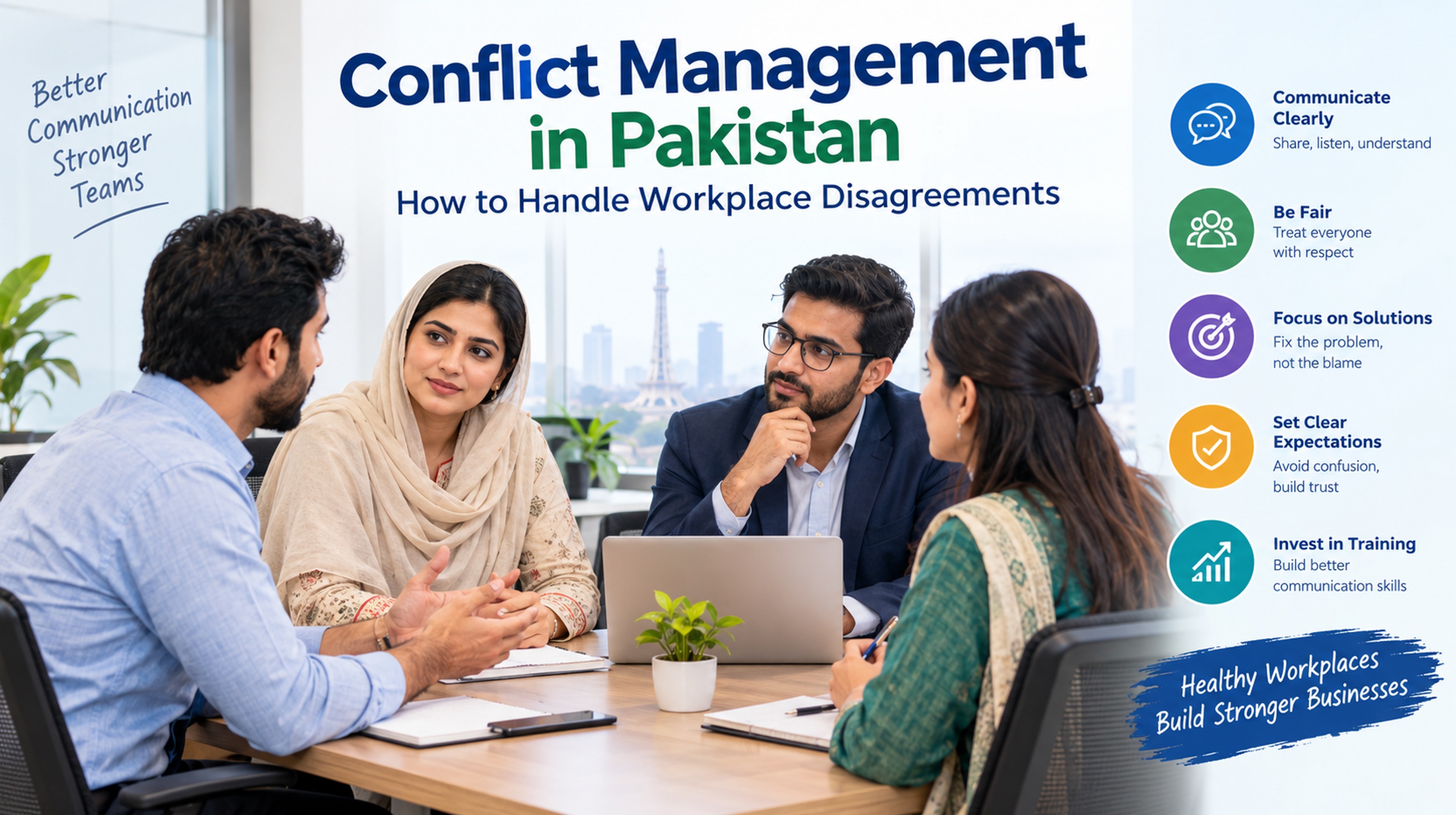
Conflict management in Pakistan is important for businesses that want to improve teamwork, communication, and employee performance. Workplace disagreements can happen when employees have different opinions, unclear responsibilities, communication problems, or competing priorities. If these issues are not handled properly, they can affect productivity, employee morale, and the overall working environment.
Businesses can reduce these challenges by developing clear workplace policies, encouraging open communication, and providing employees with practical conflict resolution skills. A positive approach helps teams solve problems professionally and maintain better working relationships.
Why Conflict Management in Pakistan Matters
Every workplace brings together people with different personalities, experiences, and working styles. These differences can sometimes lead to misunderstandings or disagreements. The goal is not to eliminate every difference of opinion but to manage disagreements before they become bigger problems.
Effective conflict management can help businesses:
- Improve communication between employees and managers.
- Reduce misunderstandings and unnecessary workplace tension.
- Encourage teamwork and cooperation.
- Support better decision-making and problem-solving.
- Improve employee confidence, morale, and productivity.
For Pakistani businesses, these skills can be particularly valuable in workplaces where employees must coordinate across departments, follow different reporting structures, or manage demanding workloads.
Common Causes of Workplace Conflict
Understanding the reasons behind workplace disagreements is the first step toward resolving them. Common causes include:
1. Poor Communication
Incomplete instructions, unclear messages, and assumptions can create confusion between employees and managers. Regular communication and clear expectations can prevent many of these issues.
2. Unclear Roles and Responsibilities
When employees do not understand their duties or decision-making authority, disagreements can arise over tasks, deadlines, and accountability. Clearly defined responsibilities help everyone understand what is expected of them.
3. Unequal Workloads
Employees may feel frustrated when they believe work is distributed unfairly. Managers should review responsibilities, discuss concerns openly, and ensure that workloads are reasonable.
4. Different Working Styles
Some employees prefer detailed planning, while others work more quickly and informally. These differences do not have to become problems. Teams can learn to respect different approaches while working toward shared objectives.
5. Leadership and Management Issues
Inconsistent decisions, unclear instructions, and a lack of feedback can contribute to workplace tension. Managers should apply policies fairly, communicate decisions clearly, and address concerns without unnecessary delays.
How to Handle Workplace Conflicts Effectively
A structured approach can help employees and managers resolve disagreements without damaging professional relationships.
Address Problems Early
Ignoring a disagreement does not always make it disappear. Small misunderstandings can grow when employees feel that their concerns are being overlooked. Addressing issues early gives everyone an opportunity to explain the situation before it becomes more serious.
Listen to Everyone Involved
Effective conflict resolution begins with listening. Each person should have a fair opportunity to explain their concerns without interruption. Managers should focus on understanding the facts rather than immediately assigning blame.
Focus on Solutions, Not Blame
Personal criticism can make workplace disagreements more difficult to resolve. Instead, employees should identify the specific problem, discuss possible solutions, and agree on practical steps to prevent the issue from happening again.
Clarify Expectations and Responsibilities
Once the main issue is understood, managers should clarify responsibilities, deadlines, and communication procedures. Clear expectations reduce the chances of similar disagreements occurring in the future.
Seek Professional Support When Needed
Some conflicts require support from a manager, HR representative, or trained mediator. Serious allegations, harassment, discrimination, or threats should be handled through appropriate organisational procedures rather than treated as ordinary disagreements.
The Role of Conflict Management Training in Pakistan
Conflict management training in Pakistan can help employees and managers develop the skills needed to deal with disagreements constructively. Training may cover active listening, emotional intelligence, communication, negotiation, problem-solving, and handling difficult conversations.
Practical exercises and workplace examples can help participants understand how to respond calmly under pressure, recognise different perspectives, and find solutions that support professional relationships.
IBP Corporate Services offers employee development support to help organisations strengthen workplace skills and improve employee effectiveness. Businesses interested in developing communication, teamwork, and interpersonal skills can explore the Employee Development services offered by IBP Corporate Services.
Building a Healthier Workplace Culture
Conflict management should be part of a company's everyday working culture rather than something considered only when a serious problem occurs. Managers can encourage employees to raise concerns respectfully, provide clear feedback, and discuss problems before they affect team performance.
Organisations should also establish clear procedures for reporting and resolving workplace concerns. Employees are more likely to communicate openly when they believe their concerns will be treated fairly and confidentially where appropriate.
Regular employee development initiatives can further support communication, leadership, and teamwork. These efforts help create a workplace where differences can be discussed professionally and resolved with a focus on shared goals.
Conclusion
Conflict management in Pakistan helps organisations address workplace disagreements, improve communication, and build stronger teams. By identifying common causes of conflict, listening to employees, clarifying expectations, and providing suitable training, businesses can create a more productive and respectful working environment.
Investing in employee development and practical conflict resolution skills can help managers and employees handle challenges more effectively while supporting long-term organisational success.
Learn more about employee development services and how they can help strengthen workplace communication and professional skills.